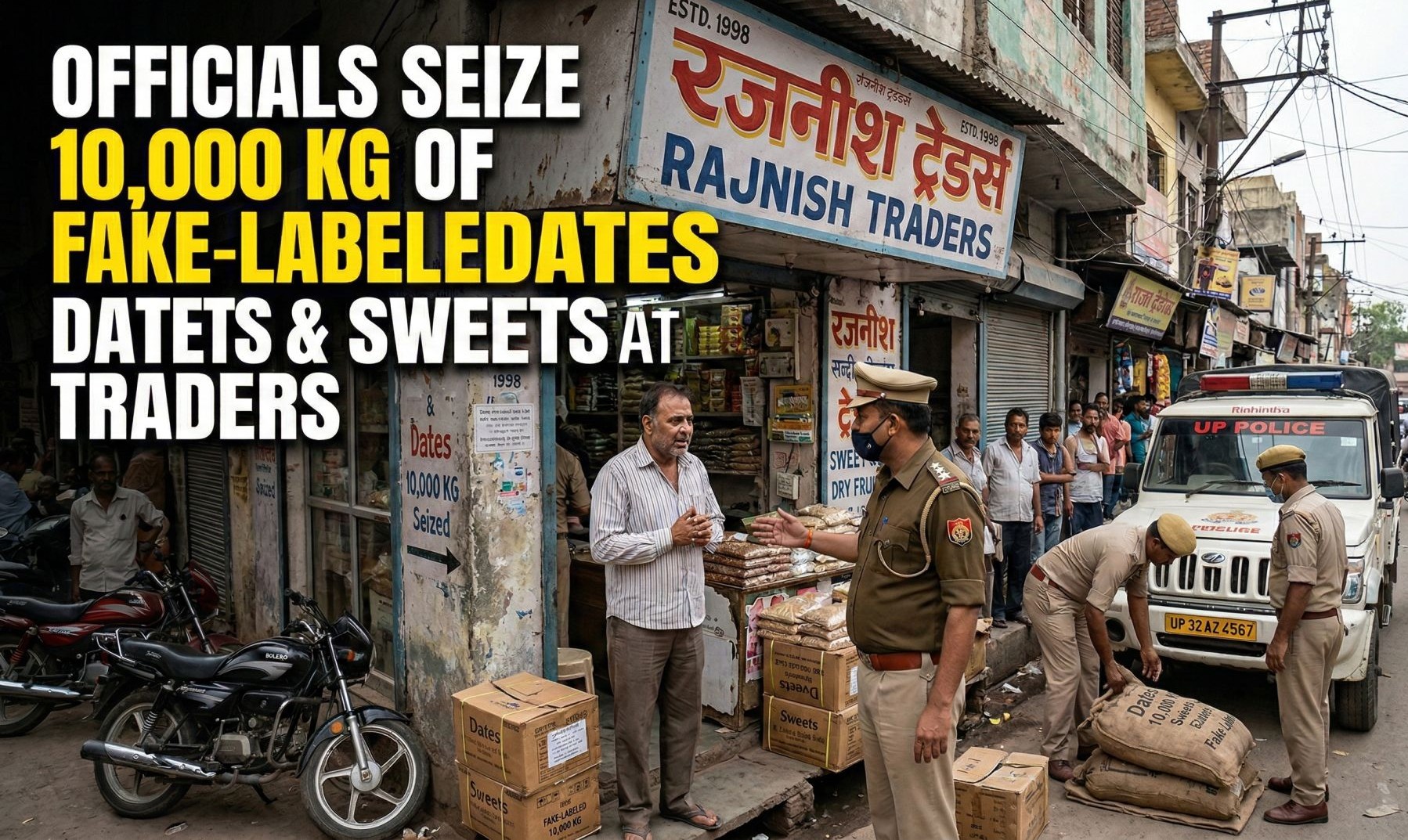
KANPUR, UTTAR PRADESH — As the holy month of Ramadan approaches, families across the country are stocking up on a festival essential: dates. But for one major supplier in Kanpur, this season of fasting and feasting was seen as an opportunity for a massive, multi-lakh rupee scam.
In a major crackdown on food fraud, food safety officials raided Rajnish Traders on February 22, 2026, uncovering a shocking operation. The team seized a staggering 10,000 kilograms of dates—worth over ₹50 lakh—that had expired four years ago.
Here is how a routine festival preparation almost turned into a public health hazard, and why this bust matters for every consumer.
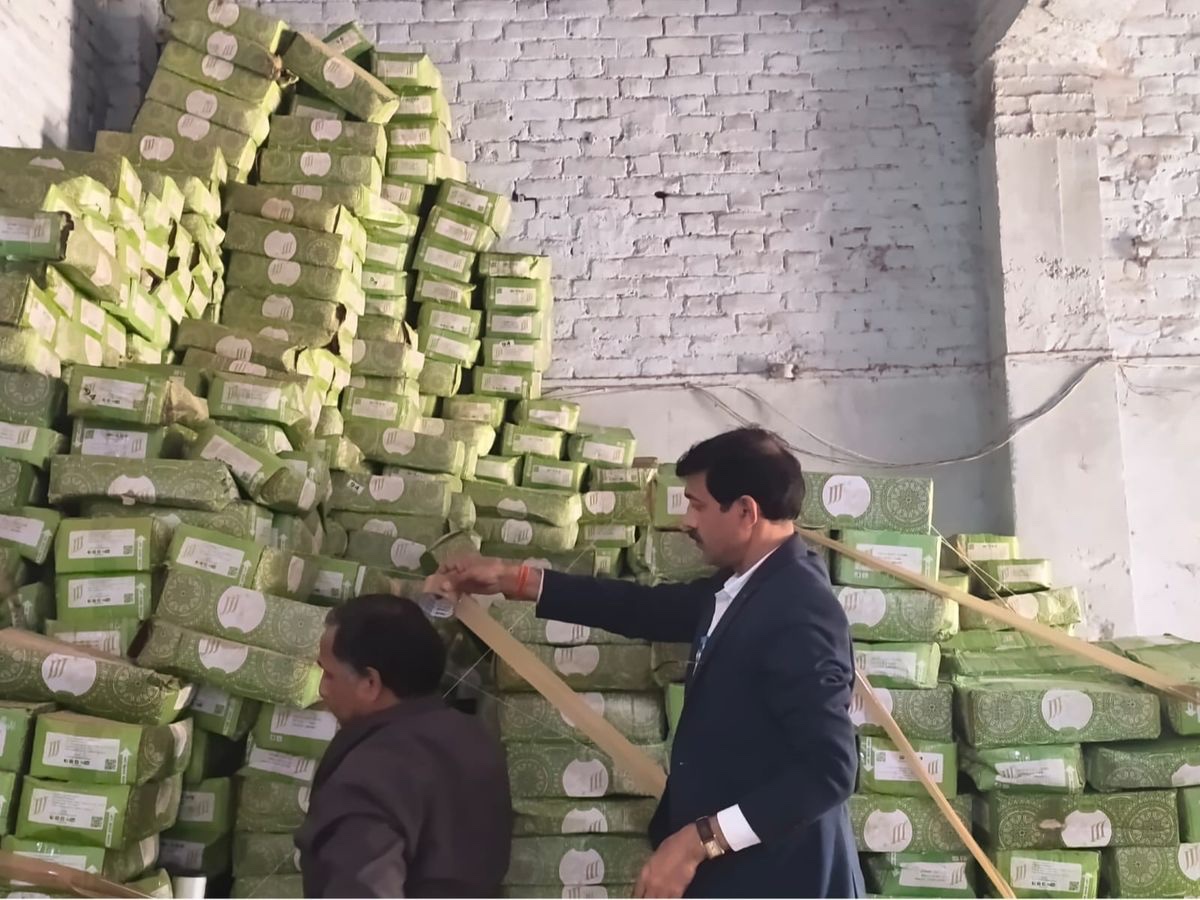
Table of Contents
The Raid: Uncovering the “Time Travel” Trick
The operation at Rajnish Traders wasn’t just about selling old food; it was a carefully calculated deception. During the raid, officials discovered that warehouse workers were systematically altering the packaging of dates that had officially expired in 2022.
To trick buyers, the fraudsters were peeling away the old expiration warnings and slapping on brand-new, counterfeit stickers claiming the dates were good until 2026.
Why do this now? The timing was no accident. During Ramadan, the demand for dates skyrockets as they are traditionally eaten to break the daily fast. Scammers know that during the holiday rush, busy shoppers are less likely to double-check the fine print on their groceries. By repackaging dead stock, the traders hoped to cash in on the festival frenzy and make a massive profit from worthless, spoiled goods.
The Hidden Dangers of Fake-Labeled Dates & Sweets
While dates are dried fruits and naturally last longer than fresh produce, they do not last forever. Fortunately, officials have reported no immediate health emergencies linked to this specific batch of dates. However, consuming food that is four years past its expiration date carries hidden risks.
When dried fruits sit in warehouses for years, two main things happen:
- Nutrient Loss: The natural vitamins and energy-boosting sugars that make dates healthy slowly break down, leaving you with empty calories.
- Mold and Toxin Growth: Even if the fruit looks normal on the outside, microscopic mold can grow inside the packaging. Certain molds on dried fruits can produce harmful toxins that cause stomach aches, allergic reactions, and severe food poisoning.
Why This Bust Matters
Also read: The Silent Crisis: When Men become the Invisible Victims of Marital Trauma
This incident is a textbook example of food fraud—when bad actors intentionally alter food or its labels to trick consumers into paying more.
- A Breach of Trust: When we buy food at the store, we trust that the dates printed on the box are true. Scams like this break that trust and make it harder for honest farmers and sellers to do their jobs.
- The Need for Vigilance: Festival seasons are prime time for food scammers. Because demand is so high, the supply chain gets stretched thin, making it easier for bad products to slip onto supermarket shelves.
The successful raid in Kanpur highlights the critical role of food safety inspectors. Their swift action prevented 10,000 kilograms of unsafe food from reaching dinner tables across the state.
How to Protect Yourself
As you shop for the upcoming holidays, keep these simple tips in mind:
- Inspect the Label: Look closely at expiration stickers. If a sticker looks like it was placed over another label, or if it peels off easily, be suspicious.
- Check the Texture: Fresh dates should be plump and slightly glossy. If they are rock-hard, have a strange sour smell, or show white dusty spots, throw them out.
- Buy from Trusted Sources: Stick to well-known brands and reputable grocers who have strict quality control.